About 17 minutes
Donahey's Cartoons — Edition Insights
Design Photography
3,833 recorded words. 3 minutes difference from this book's estimate.
View Gutenberg source #58878
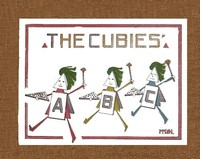
The source record for The Cubies' ABC — Background and Themes measures this digital text at 4,517 words, 20 min estimated reading time, and 1 detected text section.
The text analysis averages about 21.7 words per sentence, while the detected sections provide another way to judge how the source is divided.
Project Gutenberg metadata also associates the work with “Alphabet rhymes,” connecting these edition facts with the source record’s subject description.
Explore this collection
These alternatives are selected using recorded categories and estimated reading time.
About 17 minutes
Design Photography
3,833 recorded words. 3 minutes difference from this book's estimate.
View Gutenberg source #58878About 17 minutes
Design Photography
3,909 recorded words. 3 minutes difference from this book's estimate.
View Gutenberg source #62700About 31 minutes
Design Photography
7,052 recorded words. 11 minutes difference from this book's estimate.
View Gutenberg source #60214Search stored excerpts and compare books → Choose by your preferences →
Choices use stored catalog measurements. Estimates vary with reading speed. A shared category is a catalog label, not a claim that two books have the same argument or literary quality.
Search reads excerpt text stored with this catalog and links to its associated Gutenberg record. The connection is stored in the site database; this tool does not recheck that every excerpt is word-for-word identical to that external record. Excerpt search does not cover every chapter and does not verify historical publication dates.
Catalog snapshot checked: 2026-09-25. Coverage: 94 public books, 94 available source excerpts.
Read the complete public-domain text at its original source.
Read on Project GutenbergThe Cubies' ABC opens with a dedication to the Association of American Painters and Sculptors, the organizers of the 1913 Armory Show, to whom the Cubies owe their "incubation." This sets the stage for a playful yet pointed satire of the avant-garde art movement. The first letter, A, introduces Art in the Cubies' domain as something brand-new, with Archipenko as their guide and anatomy as their bane. The verses are structured as limericks with parenthetical asides, creating a rhythmic mockery that targets specific artists and their works.
The book uses the alphabet format not as a teaching tool but as a framework for cultural critique. Each letter targets a specific artist, concept, or figure associated with Cubism and modern art. For instance, B is for Beauty as Brancusi views it, where the Cubies "seize all that's plain to the eye, then lose it" and "search for the Soul and proceed to abuse it." The parenthetical remarks, such as "They tell me it's easy and no end of fun," add a layer of ironic commentary. The verses consistently employ a mocking tone, as seen in D for Duchamp, the "Deep-Dyed Deceiver," who draws accordions and labels them stairs—a reference to his famous painting Nude Descending a Staircase, No. 2. The Cubies' perspective is consistently dismissive of traditional art, yet the satire is directed at both the artists and the Cubies themselves.
The excerpts name several key figures from the Armory Show era. G is for Gertrude Stein's "limpid lucidity," with the Cubies devouring each word with avidity, affirming that "alone words lack sense" but hoping to become wise by swallowing the whole. H targets Robert Henri's painting Young Red Top, a realistic portrait that the Cubies regard with aversion and spite because it might "walk right out of the picture." This contrast between representational and abstract art is a recurring theme. The verses also reference Brancusi, Braque, and Archipenko, grounding the satire in real artistic debates. The dedication to the Association of American Painters and Sculptors further ties the work to the specific context of the 1913 Armory Show, which introduced American audiences to European modernism.
The poem is written in a consistent limerick-like meter with a rhyme scheme (AABBA) and parenthetical asides that often contain the punchline or a sarcastic remark. For example, in C for Color Cubistic ad libitum, the aside warns: "There'll be no colors left, if we don't soon prohibit 'em!" The voice is that of an amused observer, not a Cubie, who reports the Cubies' views with a wink. The repeated structure—each stanza ending with a line that echoes the first—creates a rhythmic predictability that contrasts with the chaotic subject matter. The use of exclamation points and dashes adds a breathless, theatrical quality. The Cubies themselves are characterized as enthusiastic but misguided, as in I for Intuition, where the narrator expresses a "sneaking suspicion" that the Cubies are on the way to perdition.
While the excerpts are incomplete, they reveal a work that is both a product of its time and a commentary on the clash between traditional and modern art. The Cubies are portrayed as a group with a distinct ideology: they reject the past (F for Future), embrace intuition over reason, and celebrate color and form over representation. The dedication to the Association of American Painters and Sculptors suggests the book may have been intended as a humorous gift or souvenir for attendees of the Armory Show. The verses do not provide a coherent narrative but rather a series of vignettes, each focusing on a different aspect of Cubist theory or practice. Readers should approach the text as a period piece that captures the public's fascination and skepticism toward modern art in 1913.
Although the excerpts do not include the illustrations by Earl Harvey Lyall, the text frequently references visual elements, such as "emerald hair" and "eyes red as rubies" in the first stanza. The interplay between text and image is crucial: the verses describe what the Cubies look like and how they distort reality. The dedication page notes that the book is "pictured by Earl Harvey Lyall," indicating that the illustrations are integral to the satire. The Cubies themselves are likely depicted as geometric, abstract figures, consistent with the Cubist style they parody. Readers should imagine the illustrations as complementing the text's mockery, perhaps showing the Cubies in absurd poses or interacting with the artworks mentioned.
This alphabet book offers a snapshot of early 20th-century American reactions to European modernism. Its specific references to artists and artworks make it a valuable primary source for understanding the cultural context of the 1913 Armory Show. Readers interested in art history, satire, or the intersection of poetry and visual culture will find the Cubies' antics both entertaining and revealing. The verses reward close reading for their layered humor and pointed critiques.
Reading about the Cubies’ irreverent jab at Duchamp made me think of my uncle’s old art magazines, and how the jokes felt like secret handshakes. A similar warmth surfaced with Ernesto Garcia Cabral: A Mexican Cartoonist — Reading Notes—that same playful defiance, but with a hat tip to Mexico City’s own roaring streets. I lingered on those pages, half-smiling at cleverness that still feels alive.
Capture what you thought, learned, and would like to remember.