About 17 minutes
Pictures of People — Story, Setting & Ideas
Design Photography
3,909 recorded words. 0 minutes difference from this book's estimate.
View Gutenberg source #62700
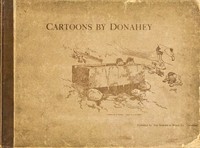
The catalog record for Donahey's Cartoons — Edition Insights provides practical reading context through 3,833 words, 17 min estimated reading time, and 2 detected text sections.
The text analysis averages about 17.7 words per sentence, while the detected sections provide another way to judge how the source is divided.
Project Gutenberg metadata also associates the work with “Caricatures and cartoons -- United States,” connecting these edition facts with the source record’s subject description.
Explore this collection
These alternatives are selected using recorded categories and estimated reading time.
About 17 minutes
Design Photography
3,909 recorded words. 0 minutes difference from this book's estimate.
View Gutenberg source #62700About 20 minutes
Design Photography
4,517 recorded words. 3 minutes difference from this book's estimate.
View Gutenberg source #41423About 31 minutes
Design Photography
7,052 recorded words. 14 minutes difference from this book's estimate.
View Gutenberg source #60214Search stored excerpts and compare books → Choose by your preferences →
Choices use stored catalog measurements. Estimates vary with reading speed. A shared category is a catalog label, not a claim that two books have the same argument or literary quality.
Search reads excerpt text stored with this catalog and links to its associated Gutenberg record. The connection is stored in the site database; this tool does not recheck that every excerpt is word-for-word identical to that external record. Excerpt search does not cover every chapter and does not verify historical publication dates.
Catalog snapshot checked: 2026-09-25. Coverage: 94 public books, 94 available source excerpts.
Read the complete public-domain text at its original source.
Read on Project GutenbergJ. H. Donahey's cartoons, originally published in The Cleveland Plain Dealer, present a series of single-panel observations on early 1900s American life. The artist's stated aim is to illustrate 'the little joys and the little troubles that help to make up the sum total of life,' and the collection lives up to that modest ambition. The cartoons are organized loosely by season and occasion, from Easter to moving day to summer vacation, with recurring characters and situations that suggest a shared community experience.
Donahey's humor relies on exaggeration and mild irony rather than sharp satire. A wife complains that 'Bruder ain't savin' nothin' for me!' on Easter morning; a father wonders which end of a plant goes up; and a boy tells the office boy that 'I buried my grandmother twice last year.' These moments capture everyday frustrations with a light touch.
Many cartoons center on the small tensions of household life. In 'WHY SHE DIDN'T GET HER NEW HAT EASTER MOR'N',' the caption 'Bruder ain't savin' nothin' for me!' hints at financial strain or selfishness within the family. 'MOVING DAY—THE LAST LOAD' and 'HOME AGAIN' depict the chaos of relocation and the relief of return. A child, after a vacation, exclaims 'Gosh, this tastes good. I haven't had anything to eat since mother disappeared!'—a joke that underscores maternal absence as both comic and essential.
The cartoons also highlight generational differences. In 'WHEN ALICE GRADUATES,' a mother is told 'Somehow or other mother, I’ve always felt that I was cut out for a farmer,' suggesting a disconnect between parental expectations and a child's aspirations. 'DECORATION DAY' shows a child wondering 'why Grandmother doesn't care to play today,' a gentle nod to the solemnity of remembrance. These scenes rely on shared understanding rather than punchlines.
The collection follows the calendar year, from Easter through the Fourth of July to autumn hunting and winter cold. 'EVERY SUNDAY MORNING' and 'A SUNDAY IN THE OPEN' contrast religious observance with leisure. The Fourth of July receives multiple cartoons: 'WANTED—A QUIET PLACE TO SPEND THE FOURTH,' 'JULY 4. Two orders for an early call,' and 'JULY 5. Anyway Doc, it was a glorious victory!'—the last showing the aftermath of celebration.
Seasonal activities recur: lawn mowing ('The voice of the lawn mower is heard through the land'), gardening ('Now I wonder which end of this Paniculata Grandiflora goes up?'), and hunting ('THE HUNTING SEASON OPENS,' 'THE TRIALS OF A NIMROD'). Donahey often pairs city and country versions of the same event, as in 'THE GIRLS WHO GO TO THE SEA SHORE, AND THE GIRL WHO STAYS AT HOME' and 'SIZING UP THE CITY NIMRODS.' These juxtapositions reveal a tension between idealized rural life and urban reality.
Donahey's style is deliberately simple, as he notes in his preface: the cartoons are 'designed to illustrate in simple fashion.' The captions are terse, often a single line of dialogue or a brief observation. For example, 'ALONE IN THE WORLD—MOTHER’S OFF TO THE SEASHORE' conveys abandonment through a single phrase. 'THE OLD FLAG AGAIN' references Congress returning captured flags to the South, a political note rare in the collection.
The humor often depends on understatement. In 'SCORCHING THE SCORCHERS,' the title puns on early automobile speeders. 'SOLVING THE STREET RAILWAY PROBLEM' and 'A SMOKING CAR FOR LADIES' touch on contemporary urban issues. Donahey's linework, though not visible in the text, is implied by the captions' focus on posture and expression: 'About Ready to Fly,' 'He Ain't Feelin' Very Well This Morn',' and 'When the Burrs Begin to Open.' The cartoons reward close attention to both image and word.
Readers approaching Donahey's Cartoons should treat each cartoon as a standalone vignette rather than part of a narrative. The collection's value lies in its cumulative portrait of a specific time and place—Cleveland and its environs in the early 1900s. Pay attention to recurring motifs: the tension between domestic duty and leisure, the contrast between generations, and the gentle mockery of modern inconveniences. Donahey's work is best enjoyed slowly, letting each image and caption resonate.
Flipping through Donahey's cartoons, I remembered my grandfather chuckling over a similar drawing of a man shoveling snow while his neighbor watched from a warm window. That gentle, knowing humor feels echoed in Raemaekers' Cartoons: With Accompanying Notes by Well-known English Writers — Context and Discussion, where the everyday quietly meets something larger, and I feel that same quiet ache of recognition, unhurried and familiar.
Your answers remain private and are stored only in this browser.