About 20 minutes
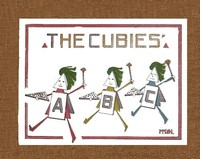
The Cubies' ABC — Background and Themes
Design Photography
4,517 recorded words. 11 minutes difference from this book's estimate.
View Gutenberg source #41423
This digital edition of Ernesto Garcia Cabral: A Mexican Cartoonist — Reading Notes is described by source-level measurements including 7,052 words, 31 min estimated reading time, and 2 detected text sections.
The text analysis averages about 18.4 words per sentence, while the detected sections provide another way to judge how the source is divided.
Project Gutenberg metadata also associates the work with “García Cabral, Ernesto, 1890-1968,” connecting these edition facts with the source record’s subject description.
Explore this collection
These alternatives are selected using recorded categories and estimated reading time.
About 20 minutes
Design Photography
4,517 recorded words. 11 minutes difference from this book's estimate.
View Gutenberg source #41423About 43 minutes
Design Photography
9,782 recorded words. 12 minutes difference from this book's estimate.
View Gutenberg source #59801About 17 minutes
Design Photography
3,833 recorded words. 14 minutes difference from this book's estimate.
View Gutenberg source #58878Search stored excerpts and compare books → Choose by your preferences →
Choices use stored catalog measurements. Estimates vary with reading speed. A shared category is a catalog label, not a claim that two books have the same argument or literary quality.
Search reads excerpt text stored with this catalog and links to its associated Gutenberg record. The connection is stored in the site database; this tool does not recheck that every excerpt is word-for-word identical to that external record. Excerpt search does not cover every chapter and does not verify historical publication dates.
Catalog snapshot checked: 2026-09-25. Coverage: 94 public books, 94 available source excerpts.
Read the complete public-domain text at its original source.
Read on Project GutenbergThis 1923 booklet, issued for private circulation, presents fifty-eight caricatures by Mexican cartoonist Ernesto García Cabral, each accompanied by a descriptive caption. The subjects range from political figures like President Obregón and Ambassador Fletcher to bullfighters such as Juan Belmonte and Rodolfo Gaona, as well as social types and everyday scenes. The compiler, G. R. G. Conway, frames Cabral's work within a lineage of caricature stretching back to palaeolithic cave art, citing Kipling's poem 'The Story of Ung' to underscore the ancient impulse to depict and exaggerate. The captions often rely on wordplay, especially puns that hinge on Spanish double meanings, such as 'pruebas' (fittings/proofs) and 'reconocer' (examine/recognize).
The list of illustrations reveals a deliberate mix of Mexican and international personalities. Alongside local politicians like Lic. Miguel Alessio Robles and Ing. Antonio Madrazo, we find U.S. figures such as William Howard Taft, Henry Ford, and William Randolph Hearst. The inclusion of bullfighters—Rodolfo Gaona, Ignacio Sánchez Mejías, Juan Belmonte—reflects their celebrity status in 1920s Mexico. The captions for these portraits are terse, often noting a single trait: Sánchez Mejías is 'a very brave and ambitious bull-fighter from Seville' who abandoned medicine for the 'plaudits of the middle and upper-class frequenters of the bull-ring.' This phrasing suggests the compiler’s own social vantage point, as the booklet was 'for the amusement of friends' and printed in a limited run of 150 copies.
The political cartoons rely heavily on visual-verbal puns. In cartoon XXXIII, President Obregón asks Uncle Sam, 'When will you let me have the suit, boss?' and Uncle Sam replies, 'We require many fittings (pruebas) yet, General.' A footnote explains that pruebas means both 'fittings' and 'proofs.' Similarly, cartoon XXXIV plays on reconocer (examine/recognize) in the context of U.S. recognition of Obregón’s government. Other cartoons lampoon social issues: the water crisis (XLVI) is mocked via a joke about black shirts being 'the triumph of Fascismo' or merely 'excess of dirt.' The humor often targets domestic life, as in the henpecked husband (L) or the man whose wife 'gives a tremendous lot of light' (XLII), a pun on giving birth. These captions show Cabral’s wit operating within a specific linguistic and cultural frame.
The excerpts provide the full list of illustrations and captions for cartoons XXXII through L, but the biographical foreword and earlier cartoons are missing. The text begins with a Kipling epigraph and a brief history of caricature, then jumps to the portrait list. Without the foreword, we cannot assess Conway’s biographical claims about Cabral. The captions themselves are descriptive rather than analytical; they explain the joke or context but do not evaluate the artistry. For instance, cartoon XXXV is said to depict 'the strangling of Industry in the State of Veracruz by Bolshevism,' but no visual description is given. The reader must infer Cabral’s style from the subjects and wordplay alone. The booklet’s private, limited nature suggests it was not intended for wide circulation, which may explain the absence of critical commentary.
Readers approaching this work should note that the excerpts offer only a partial view: the biographical foreword and many cartoons are absent. The captions, while informative, do not describe the visual composition or technique. To appreciate Cabral’s artistry, one would need to consult the original illustrations, which are not reproduced in the text. The booklet remains a period artifact, reflecting the tastes and humor of a specific social circle in 1920s Mexico City.
Holding that slim Cabral booklet, I kept noticing how a single line could carry a whole man’s pride or foolishness. It reminded me, strangely, of an old Donahey volume gathering dust on a lower shelf—both seem to whisper about their era without raising a voice. There is comfort in how Donahey's Cartoons — Edition Insights lingers on quiet details, much like those evening sketches of cabaret tables and tired matadors.
Save your reaction, strongest insight, and memorable passage.