About 16 minutes
War, 52 Carey Cartoons — Background and Themes
Architecture
3,524 recorded words. 3 minutes difference from this book's estimate.
View Gutenberg source #67566
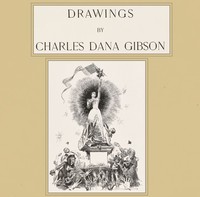
This digital edition of Drawings by Charles Dana Gibson — Background and Themes is described by source-level measurements including 4,327 words, 19 min estimated reading time, and 1 detected text section.
The text analysis averages about 16.9 words per sentence, while the detected sections provide another way to judge how the source is divided.
Project Gutenberg metadata also associates the work with “Caricatures and cartoons -- United States,” connecting these edition facts with the source record’s subject description.
Explore this collection
These alternatives are selected using recorded categories and estimated reading time.
About 16 minutes
Architecture
3,524 recorded words. 3 minutes difference from this book's estimate.
View Gutenberg source #67566About 15 minutes
Architecture
3,252 recorded words. 4 minutes difference from this book's estimate.
View Gutenberg source #66098About 28 minutes
Architecture
6,360 recorded words. 9 minutes difference from this book's estimate.
View Gutenberg source #65955Search stored excerpts and compare books → Choose by your preferences →
Choices use stored catalog measurements. Estimates vary with reading speed. A shared category is a catalog label, not a claim that two books have the same argument or literary quality.
Search reads excerpt text stored with this catalog and links to its associated Gutenberg record. The connection is stored in the site database; this tool does not recheck that every excerpt is word-for-word identical to that external record. Excerpt search does not cover every chapter and does not verify historical publication dates.
Catalog snapshot checked: 2026-09-25. Coverage: 94 public books, 94 available source excerpts.
Read the complete public-domain text at its original source.
Read on Project GutenbergCharles Dana Gibson’s Drawings (1896) is a collection of single-panel cartoons that rely on a tight interplay between image and caption. The excerpts show a world of sharp-tongued bachelors, calculating millionaires, and the endlessly discussed “American Girl.” Gibson’s humor often turns on a final line that subverts expectation—as when a girl responds to her father’s objection that her suitor has no money by saying, “His prospects are bright. … he’s going to marry me!” Such reversals are the collection’s signature move.
The excerpts introduce a limited but consistent set of characters: the American girl abroad, the impecunious cowboy, the oldish millionaire, the English nobleman, and the beleaguered father. Gibson does not develop individuals but uses these types as shorthand for class and gender dynamics. For instance, “THE AMERICAN GIRL ABROAD” appears multiple times, always chaperoned and always the object of aristocratic attention. The captions rarely name characters; instead they label situations—“TRIALS OF A BUD,” “RUNNING THE GAUNTLET AMONG HER RIVALS”—turning each drawing into a generic social vignette. This repetition of types suggests Gibson is less interested in unique personalities than in the predictable comedy of manners that arises when these figures interact.
Many of the captions are mini-dialogues that deliver a punchline through a character’s unexpected reply. In “A BRIGHT OUTLOOK,” the father’s concern about Jack Rodgers’s lack of money is undercut by the girl’s retort. In another, a man says Robinson “is very anxious to marry again” and the woman asks why—only to learn his wife is still alive. The humor depends on the reader inferring the visual context (the wife is present) from the caption alone. Gibson also uses one-liners: “The statistics bear it out. Less than half are bachelors.” These exchanges are economical; they rarely exceed four lines, and the final line always pivots. The effect is a rapid-fire wit that rewards close reading of the verbal text.
Several captions explicitly frame marriage as a market. “SOME FEATURES OF THE MATRIMONIAL MARKET” is a heading, and “A BRIGHT OUTLOOK” treats a daughter’s marriage as a financial transaction. The American girl is both a commodity and a savvy negotiator: she captures noblemen, yet her “happiness is not complete” even with a duke and two noblemen ready to marry her. Gibson also satirizes the double standard of age and wealth: “These young girls who marry oldish millionaires should not be wandering over the plains with impecunious cowboys.” The recurring phrase “American girl” signals a national type—independent, desirable, and calculating—that Gibson returns to obsessively, making it the collection’s central figure.
Because the excerpts provide only captions, the reader must imagine the missing drawings. Gibson’s captions often describe a scene that the picture presumably shows: “IT IS NOW 6:45 P.M., AND THIS DOG HAS BEEN KEPT OUT HERE SINCE TEN IN THE MORNING.” The caption supplies the time and the complaint, but the drawing would show the dog’s posture and the owner’s expression. Similarly, “THAT DELICIOUS MOMENT WHEN THE NARRATOR HAS TOLD HIS MOST SUBTLE STORY … AND THEY ARE STILL WAITING TO CATCH THE POINT” describes a social awkwardness that the image would make visible. This gap between text and image is central to the humor: the caption sets up a situation that the drawing completes, and the reader must mentally reconstruct the full joke.
Reading Drawings as a sequence of captions reveals Gibson’s consistent preoccupations: the American girl, the marriage market, and the witty reversal. The collection rewards attention to its verbal patterns—the repeated types, the punchline structure, the gaps left for the image. A first-time reader might best approach these drawings by reading the captions aloud, noting how each one sets up an expectation that the final line or the implied picture overturns.
That rainy afternoon, I stayed with Drawings by Charles Dana Gibson, lingering on the sharp little captions, the way a lifted eyebrow could cut through a room. Later, restless, I picked up a volume almost at random and found myself inside the quiet hands of Dürer and Raphael—a different kind of precision, but the same patient wonder at what a face can hold. Great Artists, Vol 1.: Raphael, Rubens, Murillo, and Durer — Inside the Classic felt like a whispered answer.
Build a private reading journal entry for this title.