1

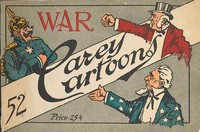
War, 52 Carey Cartoons — Background and Themes
(0 User reviews)
292
Project Gutenberg
2022
Not confirmed
World War, 1914-1918 -- Caricatures and cartoons
Readers of public-domain and historical texts
Project Gutenberg digital edition
en
Edition facts
Words
3,524
Reading time
16 min
Text sections
1
For War, 52 Carey Cartoons — Background and Themes, the stored edition analysis reports 3,524 words, 16 min estimated reading time, and 1 detected text section.
The text analysis averages about 26.1 words per sentence, while the detected sections provide another way to judge how the source is divided.
Project Gutenberg metadata also associates the work with “World War, 1914-1918 -- Caricatures and cartoons,” connecting these edition facts with the source record’s subject description.
Source:
Project Gutenberg record #67566
Editor Ray Smith's 1915 collection of 52 color cartoons from the Carey Cartoon Service, designed for window display, maintains deliberate neutrality on World War I while satirizing monarchs and nations.
Read the complete public-domain text at its original source.
Read on Project GutenbergThe editorial note for War, 52 Carey Cartoons begins with an announcement that frames the cartoon as a modern tool for public engagement: “no longer venomous, the cartoon is regarded as a humorous or sarcastic comment on topics uppermost in the nation’s mind.” Editor Ray Smith explains that the Carey Fountain Pen Stores originated the idea of using cartoons as window attractions, a method that proved successful enough to extend to other merchants. The collection’s stated aim is to “dispel gloom” while maintaining “absolute neutrality” during the European War, a deliberate choice to avoid offending citizens with ancestral ties to belligerent nations. The cartoons are described as hand-colored, accurate in portraying “character and traits of the monarchs and peoples,” and issued in a deluxe edition bound in limp leather.
A Commercial Origin for Wartime Satire
The Carey Cartoon Service was not a newspaper syndicate but a retail promotion tool. Smith notes that the window-display concept had been used for “about eight years” before the war, and its extension to other merchants created “hundreds of stores” participating. This commercial backdrop shapes the collection’s tone: the cartoons are designed to attract passersby, not to provoke. The editor emphasizes that the war subject was initially unpromising for window display due to “bitter partisan feelings,” yet the series succeeded by seeking neutrality. Readers should note that each cartoon originally appeared in a store window, a context that likely influenced their visual clarity and broad appeal.
Neutrality as a Creative Constraint
Smith explicitly states that “absolute neutrality has been sought and maintained” in the cartoons, in keeping with President Wilson’s appeal for impartial words and deeds. This is a striking claim for a collection about a war that had already generated fierce propaganda. The editor acknowledges the difficulty, calling the treatment “discreetly and masterfully” executed. The cartoons avoid taking sides, instead focusing on the “character and traits” of monarchs and peoples. For a first-time reader, this neutrality may manifest in the absence of clear villains or heroes; the humor likely derives from absurdity rather than partisanship. The excerpts do not include any cartoon descriptions, so the reader must assess how well the editor’s promise holds.
The Deluxe Edition and Material Presentation
The announcement promotes an “EDITION DE LUXE” of the 52 cartoons: hand-colored, printed on “fine quality ledger paper,” bound in “full limp leather,” and sent postpaid for $2.50. This material description suggests the book was marketed as a collectible object, not merely a disposable pamphlet. The copyright notice dates to 1915, placing the collection in the second year of the war. The editor’s emphasis on quality and permanence contrasts with the ephemeral nature of window displays. Readers should consider that the digital edition reproduces only the text of the announcement and legal boilerplate; the cartoons themselves are not included in the excerpts. The physical format—hand-colored plates—implies that the visual experience was central to the work’s impact.
What the Excerpts Leave Unseen
The Project Gutenberg text contains only the front matter and standard licensing pages. No cartoon images or captions are present in the excerpts. The editor’s announcement is the sole substantive content, meaning the reader cannot verify the neutrality claim or analyze the artistic style. The catalog subject “World War, 1914-1918 – Caricatures and cartoons” confirms the genre, but the specific targets and techniques remain unknown. The word count of 3,524 suggests the full book includes the 52 cartoons with minimal text. A first-time reader should approach the work as a historical artifact: the editorial framing is as important as the missing cartoons. The collection’s value lies in its attempt to balance commerce, neutrality, and satire during a deeply divisive conflict.
Because the digital edition omits the cartoons themselves, readers must rely on Smith’s editorial lens to imagine the visual content. The announcement provides a rare window into the commercial logic behind wartime satire, where window displays aimed to attract crowds without inflaming passions. To understand the cartoons fully, one would need to consult the original 1915 edition or archival images. This note serves as a reminder that the context of production—a chain of pen stores, a neutral stance, a deluxe binding—shapes how the humor was intended to function.
I flipped through those Carey cartoons the other day, and something about their quiet, deliberate distance from the war stayed with me. It felt like holding a breath. The same gentle strangeness lingers in William Blake — Background and Themes—that sense of worlds observed from just outside their noise, asking nothing, only waiting to be seen softly.
There are no reviews for this eBook.
There are no comments for this eBook.
Reader reflection
What did you think of this book?
Answer a few questions and save a private reflection on this device.
Your progress
0
/
10
2
Was reading this book enjoyable?
3
Would you recommend this book to another reader?
4
How easy was the book to follow?
5
How original did the book feel?
6
Could you see yourself revisiting this book?
7
Which element worked best for you?
8
How would you describe its reading pace?
9
Which lesson or insight stayed with you?
10