About 263 minutes
The Growth of the English House A short history of its architectural development from 1100 to 1800 — Reading Companion
Architecture
60,315 recorded words. 7 minutes difference from this book's estimate.
View Gutenberg source #67574
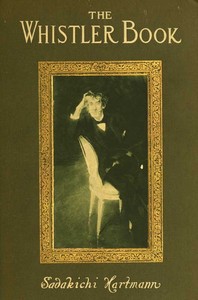
For The Whistler book — Context and Discussion, the stored edition analysis reports 58,875 words, 4 hr 16 min estimated reading time, and 21 detected text sections.
The text analysis averages about 19.0 words per sentence, while the detected sections provide another way to judge how the source is divided.
Project Gutenberg metadata also associates the work with “Whistler, James McNeill, 1834-1903,” connecting these edition facts with the source record’s subject description.
Explore this collection
These alternatives are selected using recorded categories and estimated reading time.
About 263 minutes
Architecture
60,315 recorded words. 7 minutes difference from this book's estimate.
View Gutenberg source #67574About 265 minutes
Architecture
60,838 recorded words. 9 minutes difference from this book's estimate.
View Gutenberg source #61986About 267 minutes
Architecture
61,206 recorded words. 11 minutes difference from this book's estimate.
View Gutenberg source #71634Search stored excerpts and compare books → Choose by your preferences →
Choices use stored catalog measurements. Estimates vary with reading speed. A shared category is a catalog label, not a claim that two books have the same argument or literary quality.
Search reads excerpt text stored with this catalog and links to its associated Gutenberg record. The connection is stored in the site database; this tool does not recheck that every excerpt is word-for-word identical to that external record. Excerpt search does not cover every chapter and does not verify historical publication dates.
Catalog snapshot checked: 2026-09-25. Coverage: 94 public books, 94 available source excerpts.
Read the complete public-domain text at its original source.
Read on Project GutenbergSadakichi Hartmann opens his study of James McNeill Whistler by positioning the artist as a master of frugal brushwork, one who achieves 'astounding variety, subtlety and virility' through thin, low-pitched colour tints. Rather than offering a chronological biography, Hartmann structures his monograph around conceptual chapters—'The Art of Omission,' 'On Light and Tone Problems,' 'Moss-like Gradations'—that dissect Whistler's technical and aesthetic principles. The author’s own voice is distinctive: he compares Whistler’s technique unfavorably to Franz Hals in scale, yet praises his 'wizard-like dexterity' with optical illusions. Hartmann’s critical stance is neither hagiographic nor dismissive; he measures Whistler against Velázquez and Manet, noting that he 'merely pushed to their extreme consequence the principles which all great painters since Velasquez have championed.'
Hartmann writes as a practicing critic who borrows the vocabulary of the studio. He describes Whistler’s brushwork as 'smooth, fluid, unerring' and speaks of 'thematic development of tone' as if analyzing a musical score. His diction often carries a painter’s precision: 'frugality,' 'thinness,' 'low pitch,' 'flatness of its colour tints.' These are not abstract accolades but observations grounded in the physical properties of paint. When he calls Monet 'a plebeian' and Sargent 'a sleight of hand performer,' the judgments are deliberately provocative, yet they serve to sharpen his definition of Whistler’s uniqueness. Hartmann’s prose itself enacts the kind of economy he admires—he rarely wastes a word, and his comparisons are blunt instruments meant to carve out distinctions.
Hartmann occasionally stages a direct address, as when he remarks of the Sarasate portrait: 'The figure always seemed to me a trifle small.' This personal aside breaks the scholarly tone and invites the reader into a private deliberation. He also reports Whistler’s own words, such as the quip that reproducing a masterpiece is 'as difficult as for a hen to lay the same egg over twice.' These embedded quotations give texture to the analysis, grounding abstract principles in the artist’s own wit. Hartmann’s dialogue with his subject is not reverent; he challenges Whistler’s choices, as when he argues that 'a character delineation plus tone is surely more admirable than mere tonality.' The reader overhears a critic thinking aloud.
The book’s chapter titles—'The Art of Omission,' 'Moss-like Gradations,' 'Whistler’s Iconoclasm'—reveal a structural logic that treats each work as a solution to a formal problem. Hartmann does not proceed chronologically but thematically, grouping paintings by their technical or philosophical concerns. For instance, the discussion of the Sarasate portrait leads into a broader claim about the 'tonal school and pictorial photography.' This structure mirrors Hartmann’s thesis that Whistler’s achievement lies in 'the thematic development of tone' rather than narrative or character. The reader is guided not through a life story but through a series of aesthetic investigations, each chapter building a case for Whistler’s place in the lineage from Velázquez.
Hartmann returns repeatedly to the idea that Whistler 'combined the beauties of Eastern design with the principles of Western art.' He describes the 'mysterious atmosphere' of Whistler’s canvases as 'a poetic translation of Japanese suggestiveness—which does not care to create an illusion, but rather suggests it.' This motif appears in the analysis of the Sarasate portrait, where 'the outlines of which are lost in vibrant emptiness,' and in the praise of Whistler’s 'space and colour arrangements.' Hartmann does not treat Japanese influence as mere ornament; he sees it as the engine of Whistler’s departure from realism. The motif ties together the chapters on tone, omission, and interior decoration, giving the monograph a conceptual coherence that a simple biography would lack.
Hartmann’s monograph rewards readers who are less interested in Whistler’s biography than in the mechanics of his seeing. The author’s willingness to rank, compare, and even criticize his subject keeps the analysis from hardening into hagiography. Pay attention to the way Hartmann uses the word 'tone'—it is both a technical term and a philosophical stance. The book is best read as a series of arguments, not a reference work; its value lies in the specificity of its observations and the clarity of its dissent.
That rainy afternoon, Hartmann’s quiet obsession with Whistler’s frugal brushstrokes stayed with me—how tone alone could carry a face. Afterwards, I drifted to a slim guide on cameo cutting, almost by accident, and found the same patience for restraint. Cameo Cutting — A Reader’s Guide felt like a whispered echo of that same discipline.
Capture what you thought, learned, and would like to remember.