About 268 minutes
Hopes and Fears for Art — Reading Notes
Architecture
61,551 recorded words. 0 minutes difference from this book's estimate.
View Gutenberg source #3773
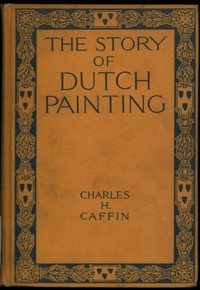
For The Story of Dutch Painting — Key Ideas to Explore, the stored edition analysis reports 61,627 words, 4 hr 28 min estimated reading time, and 11 detected text sections.
The text analysis averages about 28.4 words per sentence, while the detected sections provide another way to judge how the source is divided.
Project Gutenberg metadata also associates the work with “Painting, Dutch,” connecting these edition facts with the source record’s subject description.
Explore this collection
These alternatives are selected using recorded categories and estimated reading time.
About 268 minutes
Architecture
61,551 recorded words. 0 minutes difference from this book's estimate.
View Gutenberg source #3773About 267 minutes
Architecture
61,206 recorded words. 1 minutes difference from this book's estimate.
View Gutenberg source #71634About 265 minutes
Architecture
60,838 recorded words. 3 minutes difference from this book's estimate.
View Gutenberg source #61986Search stored excerpts and compare books → Choose by your preferences →
Choices use stored catalog measurements. Estimates vary with reading speed. A shared category is a catalog label, not a claim that two books have the same argument or literary quality.
Search reads excerpt text stored with this catalog and links to its associated Gutenberg record. The connection is stored in the site database; this tool does not recheck that every excerpt is word-for-word identical to that external record. Excerpt search does not cover every chapter and does not verify historical publication dates.
Catalog snapshot checked: 2026-09-25. Coverage: 94 public books, 94 available source excerpts.
Read the complete public-domain text at its original source.
Read on Project GutenbergCharles H. Caffin's The Story of Dutch Painting (1911) opens with a dedication to the art of the old Dutch Republic, framing the narrative as a chronicle of national artistic identity. The excerpts provided focus on the chapter discussing Nicolaes Maes, a pupil of Rembrandt, and offer a detailed critique of his genre paintings. Caffin draws on the art historian Wilhelm Bode to argue that Maes's large-scale works, such as Dreaming and Asking a Blessing, suffer from a mismatch between size and execution, lacking the “powerful and individual language” of Rembrandt. In contrast, Maes's smaller canvases, like An Old Woman Spinning, achieve a “natural and complete equipoise” of sentiment and technique. This comparative method—evaluating artists by their ability to fit scale to intention—is a recurring lens in the book.
Caffin’s analysis of Maes reveals a consistent evaluative framework: he judges painters by how well they match the size of their canvas to the scope of their ambition. He quotes Bode’s criticism that Maes’s large genre pieces present “simple motives on a large canvas with rough execution,” lacking the “powerful and individual language” of Rembrandt. This critique is not merely negative; it defines the ideal of Dutch genre painting as one where artists “admirably fitted the size of their pictures to the scope of their intention and their powers.” Caffin applies this standard to distinguish Maes’s successful small works—such as An Old Woman Spinning (Rijks Museum) and The Cradle (National Gallery)—from his less effective large ones. The reader should note how Caffin uses technical terms like “chiaroscuro” and “textures” to ground his judgments in observable features of the paintings.
Caffin traces a shift in Maes’s palette and handling of light across his career. In early works like The Dreamer, he notes a preference for “red, juxtaposed with black and less frequently with yellow,” and a “brightness of hue” that bathes the scene in warm sunlight. The description emphasizes the “admirable veracity” of textures and a “resemblance to life” tempered by a “quiet, pensive expression.” Later, in smaller genre pieces such as An Old Woman Spinning, the color scheme becomes “cooler … more restrained yet richer,” with red reappearing in the tablecloth and black in the woman’s head against a “drabbish white” wall. The lighting shifts from striking contrasts to a “dimly luminous atmosphere” that veils parts of the composition in half-tones and shadow. This evolution, Caffin argues, marks Maes’s progression from experiment to “free expression of the artist’s simple and sincere sentiment.”
Although the excerpts focus on Maes, Caffin situates his discussion within the broader tradition of Dutch genre painting. He describes the genre painters’ ideal as one of “personally inspired technical perfection,” where the scale of the work matches the intimacy of the subject. Maes’s small canvases, such as An Old Woman Spinning, are praised for their “extraordinary real[ism]” and “deeply moving … suggestion of the half-lights of existence among the aged and the poor.” This attention to humble, everyday scenes—spinning, peeling apples, a cradle—reflects the Dutch Republic’s interest in domestic life. Caffin’s language, such as “permeated with a dimly luminous atmosphere,” emphasizes the emotional resonance of these works. Readers should observe how Caffin uses Maes as a case study to illustrate the broader principles that define Dutch genre painting as a whole.
The excerpts suggest that The Story of Dutch Painting is structured as a sequence of artist-focused chapters, each employing comparison to highlight individual strengths and weaknesses. The chapter on Maes, for instance, contrasts his large and small works, and invokes Rembrandt as a benchmark. Caffin’s method is to cite specific paintings by title and location (e.g., The Young Card-Players in the National Gallery, An Old Woman Spinning in the Rijks Museum), grounding his analysis in accessible works. He also references other scholars, like Bode, to support his arguments. For a first reading, it is helpful to track these comparisons: note how Caffin builds a hierarchy of artistic achievement based on technical control and emotional unity. The book’s dedication to the “art of the old Dutch Republic” hints at a nationalistic framework, but the excerpts focus on aesthetic judgment rather than historical narrative.
Caffin’s The Story of Dutch Painting rewards readers who attend to his detailed descriptions of color, light, and composition. The excerpts on Maes demonstrate his method of evaluating artists by their ability to harmonize scale, technique, and sentiment. As you read, consider how Caffin’s comparisons—between large and small works, or between a pupil and his master—reveal his criteria for artistic excellence. The book assumes familiarity with the paintings he discusses, so having images at hand will enrich the experience.
I kept thinking about that Caffin book, how Maes could turn a quiet kitchen scene into something almost sacred. It made me remember a lesser-known volume about ships and storms, British Marine Painting — Text and Context, where the sea holds the same patient watchfulness. Light lingers there too, but on water, always shifting. That feeling never quite leaves you.
Your answers remain private and are stored only in this browser.