About 421 minutes
Modern Painters, Volume 2 (of 5) — Story, Setting & Ideas
Painting Sculpture
96,709 recorded words. 60 minutes difference from this book's estimate.
View Gutenberg source #29906
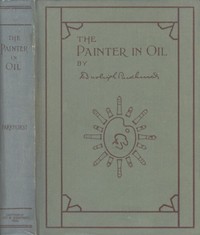
Before opening The Painter in Oil A complete treatise on the principles and technique necessary to the painting of pictures in oil colors — A Closer Reading, the edition data offers a quick orientation: 82,966 words, 6 hr 1 min estimated reading time, and 10 detected text sections.
The text analysis averages about 20.7 words per sentence, while the detected sections provide another way to judge how the source is divided.
Project Gutenberg metadata also associates the work with “Painting -- Technique,” connecting these edition facts with the source record’s subject description.
Explore this collection
These alternatives are selected using recorded categories and estimated reading time.
About 421 minutes
Painting Sculpture
96,709 recorded words. 60 minutes difference from this book's estimate.
View Gutenberg source #29906About 444 minutes
Painting Sculpture
102,061 recorded words. 83 minutes difference from this book's estimate.
View Gutenberg source #33203About 263 minutes
Painting Sculpture
60,379 recorded words. 98 minutes difference from this book's estimate.
View Gutenberg source #25897Search stored excerpts and compare books → Choose by your preferences →
Choices use stored catalog measurements. Estimates vary with reading speed. A shared category is a catalog label, not a claim that two books have the same argument or literary quality.
Search reads excerpt text stored with this catalog and links to its associated Gutenberg record. The connection is stored in the site database; this tool does not recheck that every excerpt is word-for-word identical to that external record. Excerpt search does not cover every chapter and does not verify historical publication dates.
Catalog snapshot checked: 2026-09-25. Coverage: 94 public books, 94 available source excerpts.
Read the complete public-domain text at its original source.
Read on Project GutenbergParkhurst opens his treatise with a frank admission: books of instruction in painting have rarely succeeded because they focus on recipes rather than principles. His solution is to ground the reader in the theoretical underpinnings of the craft before addressing practical concerns. The book's structure itself enacts this philosophy, moving from materials and tools through general principles to specific techniques, each section building on the last.
The author's voice is direct and occasionally combative. He quotes Henry Ward Beecher's retort to a grammarian and William Hunt's dismissal of rule-bound criticism, establishing early that for Parkhurst, the painter's expressive intent trumps any prescribed method. This stance recurs throughout the excerpts, shaping the book's argumentative rhythm.
The book's organization reflects a deliberate progression. Part I covers canvases, easels, brushes, paints, vehicles, palettes, and studios—the physical toolkit. But Part II shifts abruptly to 'Mental Attitude,' 'Tradition and Individuality,' and 'Originality.' This juxtaposition is not accidental; Parkhurst insists that technical skill is hollow without a guiding philosophy.
The transition between these parts is the book's central argument: that the painter's inner stance determines how materials are used. The author warns against mere recipe-following, urging readers to understand why a method works. The structure thus mirrors his pedagogical belief that principles must precede practice.
Parkhurst repeatedly returns to the metaphor of language. He cites Hunt's question, 'What do I care about the grammar if you've got something to say?' and Beecher's dismissal of linguistic rules when they obstruct thought. For Parkhurst, painting is a form of utterance: the complete expression of an idea is inherently grammatical, even if it violates convention.
This analogy appears in multiple contexts. In discussing technique, he argues that 'the method by which the result is attained is unimportant, provided that the result is attained.' The painter's task is to say something; the grammar will catch up. This recurring image ties the book's theoretical sections to its practical advice, creating a consistent conceptual framework.
Despite his emphasis on principles, Parkhurst is skeptical of fixed rules. He notes that every acknowledged masterpiece was painted 'in defiance of some rule' alleged to be the only right one. His advice to the student is to 'try everything' and 'experiment with all' methods, but never to use a method for its own sake.
This openness is tempered by one absolute: the permanence of the work. He warns against pigments that fade or cause cracking, making durability the sole non-negotiable. The book thus balances a radical permissiveness in technique with a conservative concern for craft longevity—a tension that gives the text its distinctive character.
The final section of Part I catalogs the physical space and tools of the painter. Parkhurst describes easels, brushes, paints, and palettes with a practitioner's eye for detail. But even here, the theoretical lens persists: he discusses how different surfaces and forms demand different paint handling, linking material choice to expressive outcome.
The studio is not merely a room but a laboratory for the principles outlined later. The author's attention to the quality of canvases and the chemistry of varnishes underscores his belief that good painting requires both conceptual clarity and material competence. This section grounds the book's idealism in the gritty reality of oil paint.
Parkhurst's treatise is best approached as a dialogue between principle and practice. Readers will find the most value by moving between the theoretical chapters and the technical ones, testing his assertions against their own experience. The book rewards those who treat it not as a manual of fixed instructions but as an invitation to think critically about every brushstroke.
That rainy afternoon, Parkhurst kept returning to the idea that technique should serve expression, never the reverse. His quiet insistence on letting each painting find its own rules stayed with me long after the rain stopped. Later, I picked up The Enjoyment of Art — Reading Companion almost without thinking. It felt less like a turning a page than a continuation of that same unhurried conversation.
Your answers remain private and are stored only in this browser.