About 84 minutes
The Enjoyment of Art — Reading Companion
Painting Sculpture
19,129 recorded words. 31 minutes difference from this book's estimate.
View Gutenberg source #27194
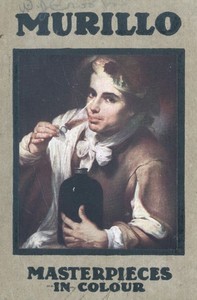
This digital edition of Murillo — Background and Themes is described by source-level measurements including 12,022 words, 53 min estimated reading time, and 2 detected text sections.
The text analysis averages about 29.3 words per sentence, while the detected sections provide another way to judge how the source is divided.
Project Gutenberg metadata also associates the work with “Murillo, Bartolomé Esteban, 1617-1682,” connecting these edition facts with the source record’s subject description.
Explore this collection
These alternatives are selected using recorded categories and estimated reading time.
About 84 minutes
Painting Sculpture
19,129 recorded words. 31 minutes difference from this book's estimate.
View Gutenberg source #27194About 103 minutes
Painting Sculpture
23,520 recorded words. 50 minutes difference from this book's estimate.
View Gutenberg source #22288About 186 minutes
Painting Sculpture
42,719 recorded words. 133 minutes difference from this book's estimate.
View Gutenberg source #2176Search stored excerpts and compare books → Choose by your preferences →
Choices use stored catalog measurements. Estimates vary with reading speed. A shared category is a catalog label, not a claim that two books have the same argument or literary quality.
Search reads excerpt text stored with this catalog and links to its associated Gutenberg record. The connection is stored in the site database; this tool does not recheck that every excerpt is word-for-word identical to that external record. Excerpt search does not cover every chapter and does not verify historical publication dates.
Catalog snapshot checked: 2026-09-25. Coverage: 94 public books, 94 available source excerpts.
Read the complete public-domain text at its original source.
Read on Project GutenbergBensusan opens his study of Murillo with a defensive posture, lamenting that the painter has "fallen from his high estate among the elect" who "prefer to magnify his shortcomings." This sets a tone of advocacy, as the author positions himself as a corrective voice against prevailing critical fashion. The text moves briskly through biographical facts—Murillo's birth during Velázquez's rise, early poverty—before settling into a pattern of describing individual paintings with evaluative commentary.
Bensusan's opening paragraphs establish a clear rhetorical stance: he is writing against the grain of contemporary criticism. He describes the "pendulum of taste" swinging away from Murillo, and insists that the painter "remains, despite them all, one of the world's teachers." This framing is not neutral biography but a deliberate rehabilitation. The author's language is evaluative throughout, calling Murillo's work "splendid" and his devotion "steadfast." Readers should note that Bensusan does not hide his partisanship; he explicitly argues that ignoring Murillo's merits "is not as it should be." This defensive tone colors every subsequent description, making the monograph as much a piece of early 20th-century art criticism as a factual account.
One of the most distinctive features of Bensusan's prose is his sharp, sometimes sarcastic commentary on art restoration and French looting. He compares Spanish restorers unfavorably to "the African witch doctor" and imagines a literary parallel: if Shakespeare's sonnets had been "restored by that 'philosopher true,' the late Martin Tupper." These analogies are specific and memorable, revealing Bensusan's frustration with what he sees as damage to Murillo's originals. He also repeatedly targets Marshal Soult, who "cast his rapacious, but well cultivated, regard" upon paintings and whose "penchant" for Murillo's work left Spanish churches and hospitals depleted. These passages inject a polemical energy into the text, distinguishing it from a dry catalogue.
After the initial biographical overview, the narrative narrows its focus to Seville's religious institutions. Bensusan describes visiting the Caridad hospital, where he spent "long hours" amid "the sights and sounds of suffering" to study the remaining canvases. This shift from broad historical context to personal, place-based observation changes the pace of the book. The author lingers on the legend of Don Miguel Manara, a "desperate sinner turned saint" whose conversion story is recounted with novelistic flair. The prose becomes more anecdotal and immersive, contrasting with the earlier summary style. Readers will notice this change in register as Bensusan moves from defending Murillo's reputation to evoking the atmosphere of the sites where his art still hangs.
Bensusan's monograph rewards attention to its rhetorical strategies: the defensive opening, the caustic asides about restorers and collectors, and the shift toward localized, anecdotal description. Readers interested in early 20th-century art criticism will find as much to analyze in the author's voice as in his subject. The text is best approached not as a neutral biography but as a passionate, opinionated defense of a painter whose reputation was then in flux.
Reading Bensusan’s quiet fury over ruined canvases, I thought of my grandfather’s hands hovering over a flaking family portrait, afraid to touch. And I remembered the same tender exasperation in Lives of the most Eminent Painters Sculptors and Architects, Vol. 10 (of 10) Bronzino to Vasari, & General Index. — Inside the Classic, where restorers are treated as gentle vandals. Some losses simply refuse to be undone, and both books let me mourn that quietly.
Capture what you thought, learned, and would like to remember.