About 476 minutes
Women artists in all ages and countries — Background and Themes
Architecture
109,421 recorded words. 5 minutes difference from this book's estimate.
View Gutenberg source #69897
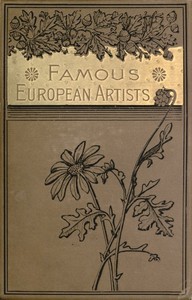
The catalog record for Famous European Artists — Reading Notes provides practical reading context through 108,120 words, 7 hr 51 min estimated reading time, and 12 detected text sections.
The text analysis averages about 24.1 words per sentence, while the detected sections provide another way to judge how the source is divided.
Project Gutenberg metadata also associates the work with “Artists -- Europe,” connecting these edition facts with the source record’s subject description.
Explore this collection
These alternatives are selected using recorded categories and estimated reading time.
About 476 minutes
Architecture
109,421 recorded words. 5 minutes difference from this book's estimate.
View Gutenberg source #69897About 463 minutes
Architecture
106,432 recorded words. 8 minutes difference from this book's estimate.
View Gutenberg source #76733About 457 minutes
Architecture
105,006 recorded words. 14 minutes difference from this book's estimate.
View Gutenberg source #64332Search stored excerpts and compare books → Choose by your preferences →
Choices use stored catalog measurements. Estimates vary with reading speed. A shared category is a catalog label, not a claim that two books have the same argument or literary quality.
Search reads excerpt text stored with this catalog and links to its associated Gutenberg record. The connection is stored in the site database; this tool does not recheck that every excerpt is word-for-word identical to that external record. Excerpt search does not cover every chapter and does not verify historical publication dates.
Catalog snapshot checked: 2026-09-25. Coverage: 94 public books, 94 available source excerpts.
Read the complete public-domain text at its original source.
Read on Project GutenbergSarah K. Bolton’s Famous European Artists (1890) opens not with a painter’s palette but with a quotation from Marcus Aurelius: “Death stands at your elbow. Be good for something while you live, and it is in your power.” This moral urgency sets the tone for a collection that treats artistic achievement as a triumph of character. The preface, citing Hermann Grimm, presents great artists as a “victorious army” who “know nothing of castes,” and Bolton adds that most of her subjects were “poor in early life.” The book thus frames biography as inspiration, not art criticism.
The chapter on Michael Angelo begins not with the artist but with a rhapsodic description of Florence, called “a gem of purest ray” where “the beauty of the past goes with you at every step.” Bolton quotes an unnamed source claiming that in Florence, “every line, every road, every gable, every tower, has some story of the past present in it.” This opening strategy—placing the artist within a city’s storied fabric—recurs throughout the book. The city becomes a character, and the artist emerges from its streets. Bolton’s prose leans on borrowed lyricism; she weaves quotations from poets and travelers into her own narrative, creating a patchwork of admiration rather than a single analytical voice.
Bolton traces Murillo’s shift from a frío (cold) to a cálido (warm) manner, citing Sweetser’s description of “graceful and well-arrayed drapery, skilfully disposed lights, harmonious tints, soft contours.” She reports that critics said his flesh tones “seemed to have been painted with blood and milk (con sangre y leche).” Notably, Bolton suggests that many Madonnas were modeled on Murillo’s wife, Doña Beatriz de Cobrera y Sotomayor, and that his own children posed for the infants Jesus and John. This domestic detail—tying sacred art to family life—is characteristic of Bolton’s biographical method, which prioritizes personal story over formal analysis.
Bolton recounts the story of St. Clara, who repelled Saracen attackers by placing the Host on a threshold and singing. She then describes Murillo’s painting of the saint’s death, quoting Mrs. Jameson at length: “St. Clara lies on her couch, her heavenly face lighted up with an ecstatic expression.” The passage illustrates Bolton’s reliance on secondary authorities—she rarely offers her own descriptions of artworks. She also notes the paintings’ later fate: taken by Marshal Soult under Napoleon, “scattered through Northern Europe,” and the convent destroyed by fire. This attention to the physical journey of artworks—their removal, dispersal, and loss—adds a historical dimension often absent from the purely biographical chapters.
Bolton’s book is less a critical study than a gallery of exemplary lives, each chapter a portrait of perseverance. Readers interested in art history may find the biographical emphasis limiting, but those drawn to nineteenth-century moral uplift—the belief that reading about great men can inspire greatness—will recognize the book’s earnest purpose. The excerpts suggest that Bolton’s strength lies in assembling vivid anecdotes and quotations, not in original analysis. Approach the volume as a period piece of Victorian biography, where character is the true subject and art is its evidence.
Reading about Bolton’s artists rising from poverty reminded me of my grandfather’s workbench, scarred and patient. That same quiet dignity fills From Seven to Seventy: Memories of a Painter and a Yankee — Reading Notes, where a life’s purpose feels less like ambition and more like breathing. Both books left me with the tender ache of noticing how ordinary hands can hold so much steadfastness.
Create a short personal record of your experience with this book.