
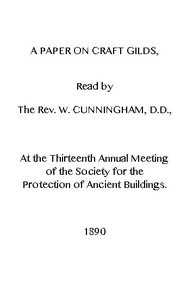
Craft Gilds by W. Cunningham
William Cunningham's Craft Gilds isn't a novel with characters and a plot twist, but it tells the story of one of the most important institutions in Western history. It starts in the messy period after the Roman Empire fell apart, when towns were struggling to rebuild. Out of that need, groups of skilled workers—weavers, bakers, metalworkers—banded together for protection and to maintain standards.
The Story
Cunningham guides us through the guilds' life cycle. First, they formed to create stability, setting rules for apprenticeships, work hours, and product quality. For a long time, they were incredibly successful. They weren't just unions; they were social clubs, religious fraternities, and local government bodies rolled into one. A master craftsman's guild membership was his ticket to respect and a good living. The story's tension comes from their eventual clash with changing times. As kings and queens built stronger nations, and as new ideas about free trade and bigger markets emerged, the guilds' tight control started to look outdated and restrictive. The book details how they slowly lost their power, unable to adapt to the scale and speed of the new economic world.
Why You Should Read It
I loved this because it connects the dots between then and now. Reading about guilds arguing over 'fair prices' or trying to stop outsiders from selling goods feels surprisingly familiar—it's the medieval version of debates about gig economies and corporate monopolies. Cunningham writes with a clear purpose: to show how economics and daily life were deeply intertwined. He makes you see the streets of a medieval town not as a fairy-tale backdrop, but as a place where your economic rights were decided by the guild you belonged to (or were excluded from). It gives you a whole new lens for understanding work, community, and change.
Final Verdict
This book is perfect for history buffs who enjoy social and economic history more than just dates and battles. It's also great for anyone curious about where our modern ideas of jobs, professional licenses, and even unions come from. It's not a breezy read—Cunningham was a serious economist—but his explanations are logical and patient. If you've ever enjoyed a book that explains why the world is structured a certain way, you'll find Craft Gilds a fascinating and rewarding deep dive.
The copyright for this book has expired, making it public property. Use this text in your own projects freely.
Charles Taylor
5 months agoJust what I was looking for.
Andrew King
7 months agoPerfect.
Christopher Harris
1 year agoThis book was worth my time since the storytelling feels authentic and emotionally grounded. This story will stay with me.
Jennifer Davis
3 months agoThe layout is very easy on the eyes.




William Johnson
11 months agoBased on the summary, I decided to read it and the emotional weight of the story is balanced perfectly. This story will stay with me.